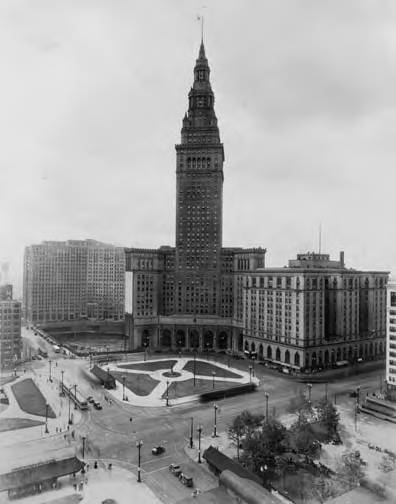
Downtown Cleveland from the air, December 1937 · NARA
In the Archive · 1796 to Present
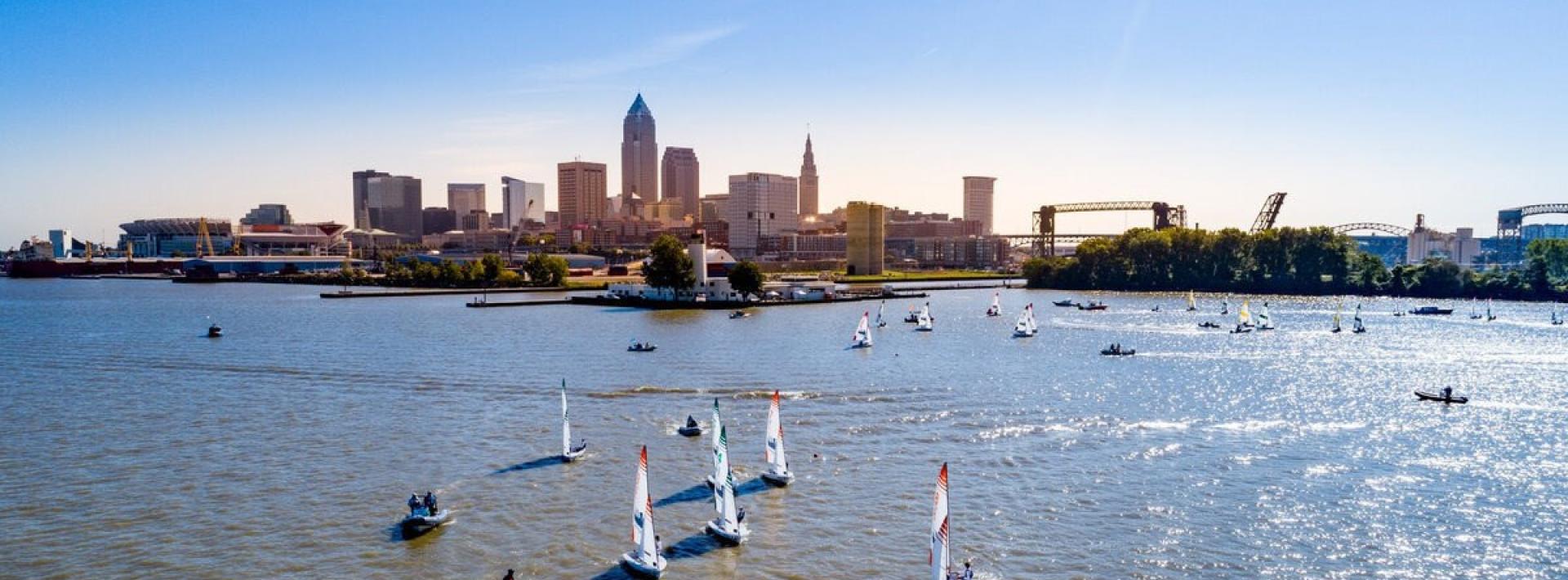
Every city has a story it tells about itself, and Cleveland has always told its story downtown. From the 9.5-acre Public Square that Seth Pease laid out in 1796 to the glass towers of the Warehouse District today, the six blocks around the Cuyahoga's east-bank bluff hold every one of the city's major architectural moments, most of its best surviving buildings, and a fair share of its ghosts.
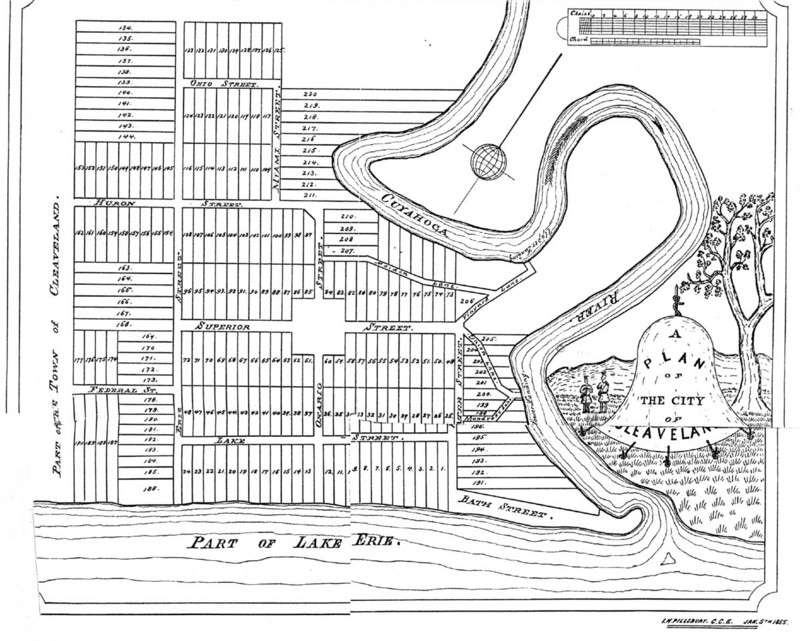
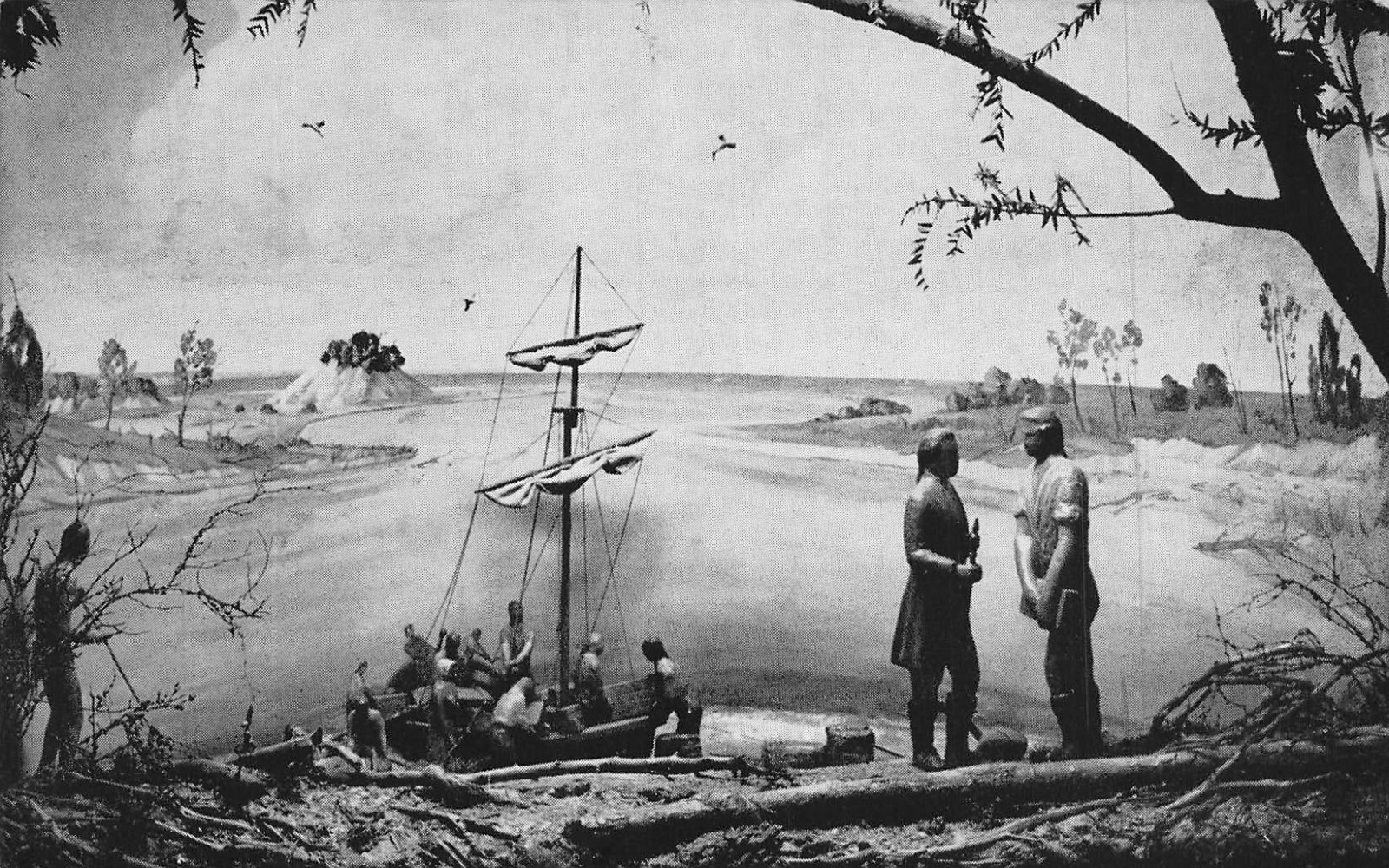
Moses Cleaveland's surveyors platted the city in October 1796 on the New England town model: a central public green of 9.5 acres (Public Square), with rectangular lots radiating out along Superior, Ontario, and Water streets. That grid, once imposed on a forested bluff of perhaps half a dozen families, became the unshakable organizing principle of the city that followed. Public Square is still 9.5 acres. Superior, Ontario, St. Clair, Euclid, and Water (now West 9th) are still the downtown's spine.
The early decades were slow. By 1820 the village had only 606 residents. The real growth began with the completion of the Ohio & Erie Canal in 1832, which made the Cuyahoga's mouth the northern terminus of a 308-mile trade corridor to the Ohio River. By 1840 the city had 6,000 residents. By 1860, 43,000. The downtown block pattern filled in with Greek Revival storefronts, frame warehouses, and the beginnings of the brick commercial architecture that would define the postwar era.
Cleveland's downtown reached its architectural peak in the half-century between the Cleveland Arcade (1890) and Terminal Tower (1930). Fortune lay on the streets. Steel, oil, shipping, and rail wealth rebuilt the downtown block by block in Beaux-Arts, Romanesque, and Art Deco stone. Euclid Avenue, running east from Public Square, was the center of it — Millionaires' Row on the eastern end, commercial Euclid (flagship retailers, grand hotels, theater palaces) on the western end nearer downtown.
In 1903, the city commissioned Daniel Burnham, the architect of Chicago's "White City," to master-plan a civic mall of uniform neoclassical public buildings running north from Public Square to the lake. The Group Plan that resulted (executed between 1903 and 1936) produced the Cuyahoga County Courthouse, City Hall, the Federal Building, the Public Auditorium, and the Public Library, all in a unified neoclassical vocabulary. It remains one of the finest unified ensembles of civic architecture in the United States.
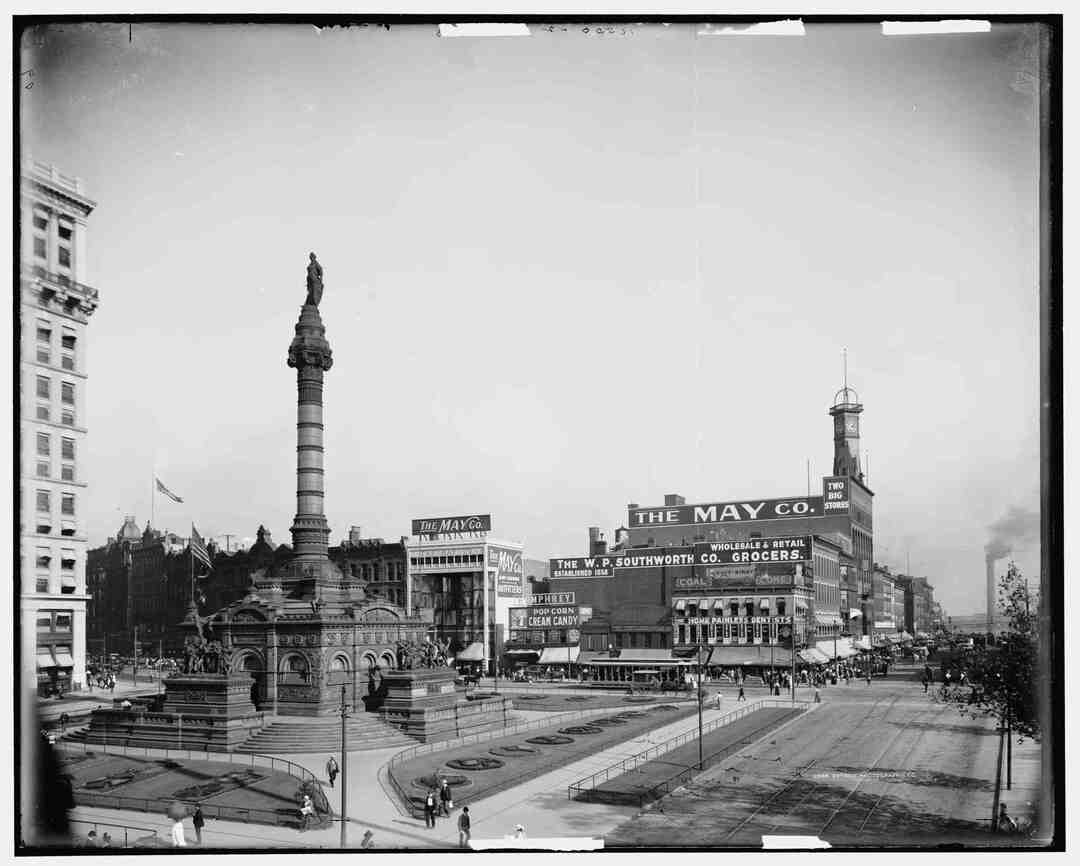
The crowning achievement was Terminal Tower, completed in 1930 as part of the Van Sweringen brothers' 52-story Union Terminal complex above the new rail concourse at the southwest corner of Public Square. At 708 feet, it was the tallest building in the world outside New York City. It defined the Cleveland skyline for a generation and anchors the downtown's identity to this day, visible from thirty miles out on Lake Erie.
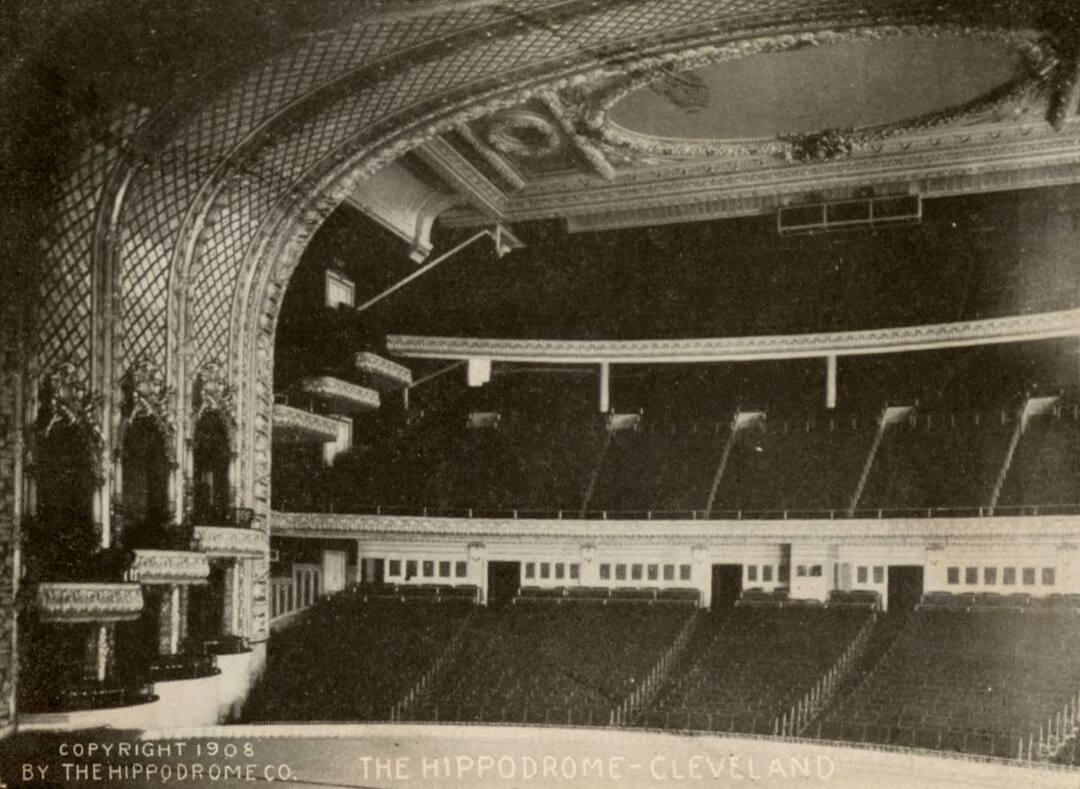
The thirty years after World War II were catastrophic for downtown Cleveland's architectural fabric. Urban renewal — the federally funded program that promised slum clearance and "modernization" — produced the demolition of the Hollenden Hotel (1962), the Hippodrome Theater (1981), the Euclid Avenue Opera House (1922, replaced by a department store), and dozens of significant commercial and residential buildings.
The scale of loss is hard to overstate. Between 1950 and 1980, downtown Cleveland lost more than a hundred significant pre-1930 buildings. Much of what replaced them was surface parking. Euclid Avenue — once compared to Fifth Avenue for its civic grandeur — became, by the mid-1970s, a corridor of chain stores, plate-glass modernism, and gap-tooth parking lots. The Millionaires' Row mansions had been demolished en masse in the 1930s to make way for nothing in particular; few survived past 1940.
The 1978 default on the city's debt (the first major US city default since the Depression) was both symptom and accelerant. The tax base had collapsed with deindustrialization; the downtown tax base had collapsed with the demolition wave. There was, for a time, genuine doubt that downtown Cleveland would survive at all.
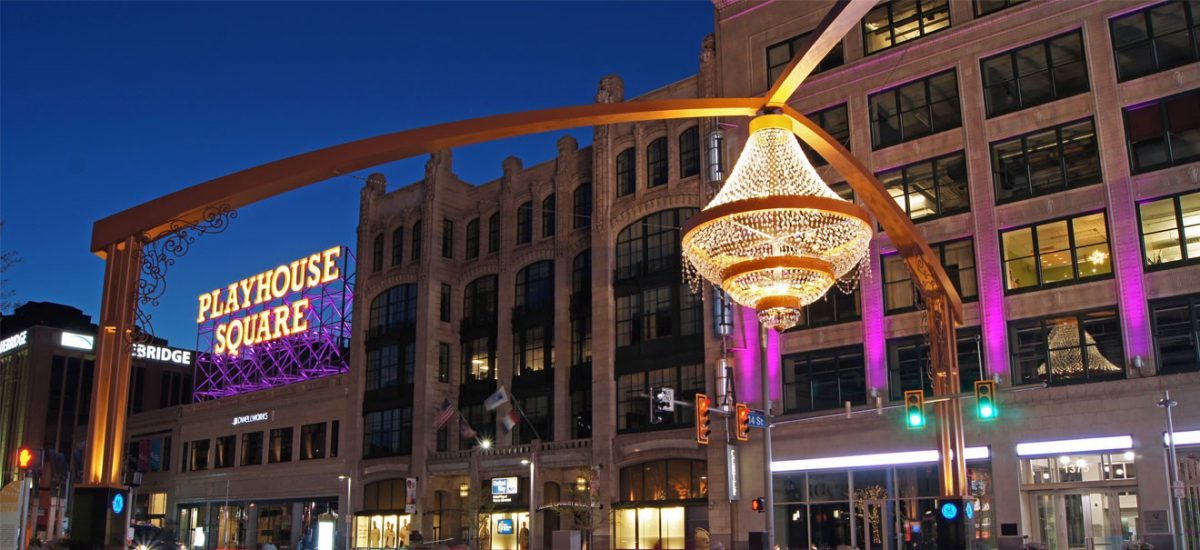
The turning point came in 1972, when Ray Shepardson organized a volunteer campaign to save the five Playhouse Square theaters (the State, Ohio, Hanna, Allen, and Palace) from demolition. The theaters had been dark for years; the wrecking ball was scheduled. Shepardson's coalition staged a cabaret in the State Theatre's lobby that ran for three years, paying for the building's interim maintenance one ticket at a time. By the late 1970s, Playhouse Square had become the largest historic theater restoration campaign in US history, and by the early 2020s, the second-largest performing arts center in the country after Lincoln Center.
The Playhouse Square model — community-driven preservation financed through a mix of tax credits, philanthropy, and adaptive reuse — became the template for subsequent downtown recoveries. The Warehouse District (restored from the 1980s onward), Tower City Center (adaptive reuse of the Union Terminal in 1990), East 4th Street (redeveloped as a restaurant district beginning in the 2000s), and the Flats (recovered from industrial ruin beginning in the 2010s) all followed variations on the Playhouse Square playbook.
The Archive
Every street, every fire, every forgotten face. The stories that don't make the headlines are often the ones worth keeping.