Carl B. Stokes
The first Black mayor of a major American city. Elected in November 1967, sixteen months after the Hough Uprising, in a campaign that mobilized unprecedented Black voter turnout in Cleveland and drew national attention as a referendum on whether American cities could govern themselves across racial lines.
Stokes's two terms as mayor, followed by a decade of service as a New York television anchor, a federal ambassadorship, and a judgeship on Cleveland Municipal Court, made him one of the most consequential public figures in twentieth-century Ohio.
Early Life
Carl Burton Stokes was born in 1927 in Cleveland, the younger of two sons of Charles Stokes, a laundryman, and Louise Stokes, a domestic worker. Charles died when Carl was two. Louise raised the two boys in public housing (the Outhwaite Homes and later Garden Valley), and both boys were expected, from the start, to do better than their parents had.
Stokes dropped out of East Technical High School at 17 to enlist in the US Army in 1945, served in the occupation of postwar Germany, and returned to finish high school at 20. He earned a B.S. in Law from the University of Minnesota in 1954 and a J.D. from Cleveland-Marshall College of Law in 1956. He passed the Ohio bar in 1957. His older brother, Louis Stokes, also became a lawyer and would serve fifteen terms in the US House of Representatives, representing Cleveland's 21st congressional district from 1969 to 1999.
In 1958, at age 30, Carl Stokes joined the Cleveland Prosecutor's office as an assistant city prosecutor. In 1962 he was elected to the Ohio General Assembly, the first Black Democrat in the Ohio House. He served three terms there before his first mayoral campaign.
The 1965 Campaign
Stokes ran for mayor the first time in 1965 as an independent, against Democratic incumbent Ralph Locher. He lost by 2,143 votes out of 236,000 cast — a margin narrow enough that he was widely credited with a moral victory, and with proving that a Black candidate could come within reach of a major US mayoralty.
Locher's handling of the Hough Uprising in July 1966, and his insistence on blaming the unrest on outside Communist agitators despite no evidence, made him politically untenable. Stokes announced his candidacy in the spring of 1967.
The 1967 Election
Stokes won the Democratic primary on October 3, 1967, defeating Locher 51% to 49%. The general election on November 7 was against Republican Seth Taft (grandson of President William Howard Taft). Taft ran a moderate campaign and explicitly refused to inject race into the contest; Stokes returned the gesture. Stokes won with 129,829 votes to Taft's 127,717, a margin of 1.9%.
Black voter turnout in Cleveland was estimated at 82%, the highest of any major American city in any election before or since. The Stokes campaign's organization — ward-level, door-to-door, structured through the Call & Post and the Black ministerial alliance — became a model for subsequent urban campaigns. It was the first time a Black candidate had won the mayoralty of a major US city.
In Office
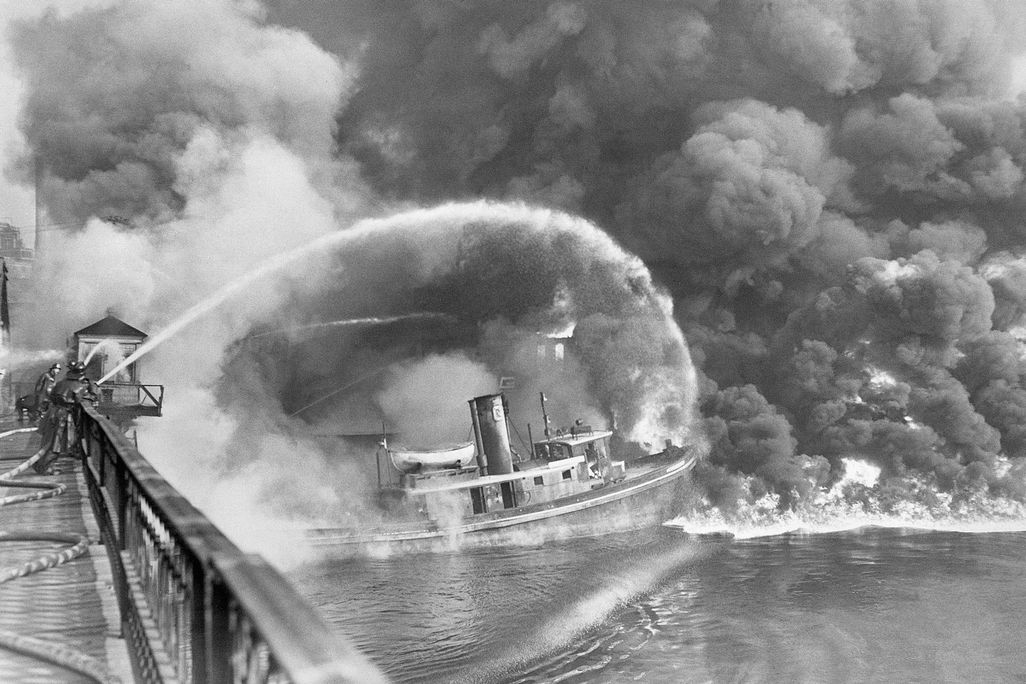
Stokes's two terms as mayor (1968–1971) were marked by both significant accomplishments and serious setbacks. He brought federal Model Cities funding to Hough and Glenville, opened the city's first public housing programs for the elderly, and integrated the Cleveland police and fire departments at the senior rank for the first time. His administration oversaw the initial cleanup of the Cuyahoga River following the June 1969 fire (the fire that drew national attention and became the catalyst for the Clean Water Act).
The Glenville shootout of July 23, 1968 — a five-hour exchange of gunfire between Cleveland police and Black nationalist activists that killed seven — fractured Stokes's relationship with Cleveland's police department. He declined to deploy white officers during the subsequent 48-hour unrest, a decision that was both widely credited with preventing a second Hough and widely denounced by police leadership. His relationship with the Cleveland Police Patrolmen's Association never recovered, and labor disputes dominated his second term.
Stokes declined to seek a third term in 1971. He left Cleveland for New York, where he worked as an anchor for WNBC-TV from 1972 to 1980. He returned to Cleveland to chair the United Auto Workers' legal department, was elected to the Cleveland Municipal Court in 1983, served as chief judge of that court, and was appointed US Ambassador to the Republic of Seychelles by President Clinton in 1994. He died in Cleveland on April 3, 1996, of esophageal cancer.
Life Timeline
- Born1927
Cleveland, Ohio. Father Charles Stokes dies in 1929. - Army Enlistment1945
Leaves East Technical High School at 17 to enlist; serves in occupied Germany. - Law Degree1956
Graduates from Cleveland-Marshall College of Law; passes the Ohio bar the following year. - Ohio General Assembly1962
Elected state representative — first Black Democrat in the Ohio House. - First Mayoral Campaign1965
Loses to Ralph Locher by 2,143 votes. - Elected Mayor1967
November 7. Defeats Seth Taft; first Black mayor of a major American city. - Glenville Shootout1968
July 23. Five-hour gunfight leaves seven dead; Stokes's withdrawal of white officers becomes defining incident of his first term. - Cuyahoga River Fire1969
June 22. A brief chemical fire on the Cuyahoga becomes a national symbol; Stokes pushes federal attention to the cleanup effort. - WNBC-TV New York1972
Joins NBC as television news anchor, the first Black anchor at a major New York network. - Cleveland Municipal Judge1983
Elected judge; later becomes chief administrative judge. - US Ambassador1994
Appointed Ambassador to the Republic of Seychelles by President Clinton. - Death1996
Dies of esophageal cancer in Cleveland; lies in state at City Hall.